
Beyond features: creating products people can’t live without
February 14, 2026 - 2 min read
AI’s Transformative Power: Accelerating Drug Discovery and Gene Editing for a Healthier Future
(This article was generated with AI and it’s based on a AI-generated transcription of a real talk on stage. While we strive for accuracy, we encourage readers to verify important information.)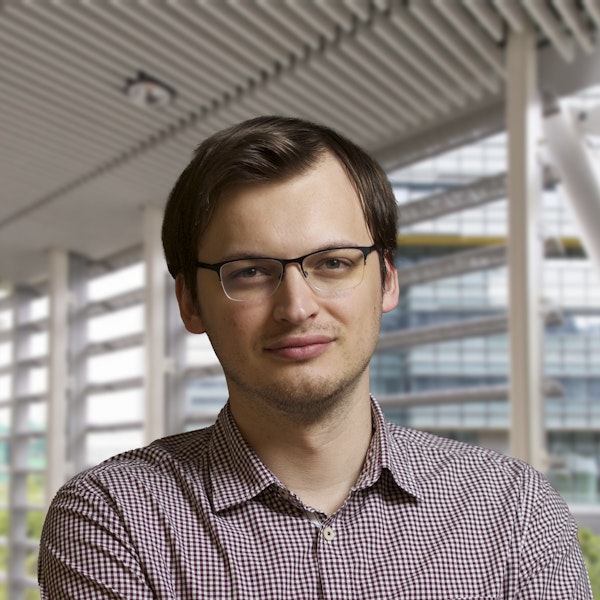
At Web Summit Qatar, Rebecca Bellan, Senior Reporter at TechCrunch, introduced a discussion on the profound impact of AI in healthcare, highlighting recent milestones. Alex Aliper, President of InSilico Medicine, saw his company join the Hong Kong public markets, while Dr. Tian Zhu, CEO of GenEditBio, received FDA approval to begin trials for CRISPR therapy targeting corneal dystrophy.
Mr. Aliper elaborated on InSilico Medicine’s 12-year journey, developing an AI platform to discover drugs more efficiently and affordably. This platform has drastically cut the development timeline from five years to just one to one-and-a-half years, yielding over 30 therapeutic programs, with 11 currently in clinical trials. He described their concept of “pharmaceutical superintelligence” as a multi-modal, multi-task model capable of solving numerous drug discovery challenges simultaneously with superhuman accuracy.
This advanced AI is crucial for boosting pharmaceutical industry productivity and addressing the shortage of talent, especially given thousands of diseases lacking cures and neglected rare disorders. Mr. Aliper emphasized that AI empowers human scientists, making them more capable and creative, allowing them to focus on guiding these platforms to discover personalized solutions. He cited a successful case study involving the repurposing of drugs for ALS, conducted in collaboration with Harvard, Mayo Clinic, Tsinghua University, and Hopkins Hospital, which led to a Phase II clinical study with 64 patients.
Dr. Zhu addressed the critical “delivery bottleneck” in gene editing, explaining GenEditBio’s proprietary Protein Delivered Vehicle (PDV), a virus-like particle. Their approach leverages AI and machine learning to identify natural viruses with specific tissue affinities. They engineer these virus-like particles, combining protein engineering with high-throughput wet lab screening to generate data, iteratively refining their AI models for more powerful, specific, and efficient delivery vehicles. This technology holds the potential to deliver longevity genes precisely to specific cells.
The speakers also discussed a significant shift in biotech capital and geographical dominance. Mr. Aliper noted that AI-driven drug discovery is no longer confined to traditional hubs like Boston or San Francisco; it can be performed globally. Dr. Zhu confirmed GenEditBio’s global operations and highlighted the impressive genomics infrastructure in the Gulf region, which they leverage to identify therapies for prevalent genetic diseases.
Regarding longevity, Mr. Aliper observed a growing global interest, particularly in the Gulf, with more scientists entering aging research. He mentioned InSilico Medicine’s co-hosting of the ARDDs conference in Copenhagen, which sees increasing international participation. The emergence of GLP-1 medicines like Mannjaro and Ozempic, considered longevity therapeutics by their manufacturers, further underscores this trend.
To ensure AI-driven cures are accessible, Dr. Zhu explained GenEditBio’s focus on in vivo genome editing, which is a more cost-effective and standardized approach compared to ex vivo cell therapies. This shift aims to make treatments more affordable and widely available. On safety, Dr. Zhu stressed rigorous monitoring for off-target effects, including potential cancer, with patient follow-ups extending beyond five years in clinical trials, ensuring transient and specific DNA surgery.
Both speakers acknowledged the need for more diverse and balanced data. Mr. Aliper pointed out that current data is heavily biased towards the Western world, necessitating local efforts in biobanking, multiomics profiling, and deep phenotyping. InSilico Medicine’s automated labs operate 24/7 to generate rich, multi-omics data. Dr. Zhu added that the human body’s non-coding DNA holds vast information, and tools like AlphaGenome are beginning to unlock its secrets.
Mr. Aliper highlighted that the intrinsic complexity of disease biology remains a significant mystery, even for AI. While chemistry simulations are advancing, and quantum computing promises greater precision, clinical trials remain challenging to model. He envisions a future within 10-20 years with a surge in FDA-approved therapeutics, offering personalized treatments based on multiomics and phenotypic profiling.
Dr. Zhu shared a similar vision, predicting a shift from late-stage disease treatment to a prevention model within two decades, particularly for conditions like Alzheimer’s and cardiovascular diseases with known genetic factors. Both leaders are driven by the challenge of making AI models more capable in science and providing DNA surgery for a broader range of genetic diseases, ultimately benefiting patients globally.